
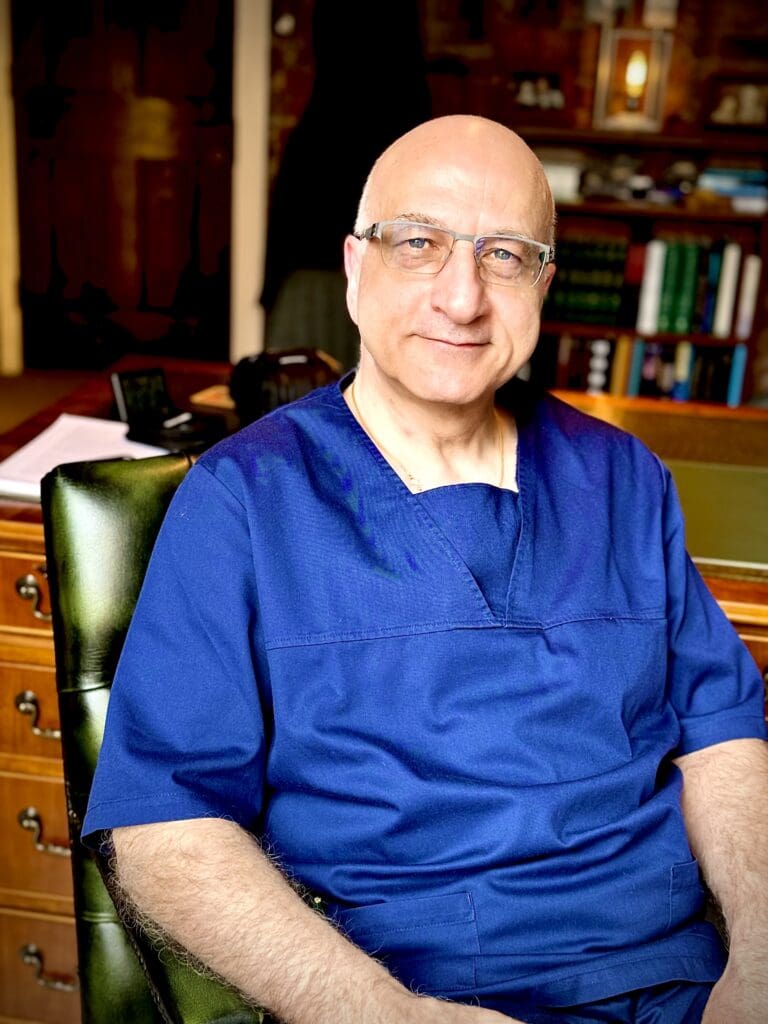
Welcome to Ali Juma
Facelift Liverpool & Wirral
30+ Years Experience
Experienced Surgeon with Over 33 Years in Practice.
Rated Excellent
100s
Happy Clients
Restore a Firmer, More Youthful Profile with Mr. Juma
Patients across Liverpool and Wirral visit us when they notice their face no longer matches how they feel inside. They describe catching sight of themselves in a shop window or seeing a photograph and wondering when that change happened. The energy is still there. Life feels full. But the reflection tells a different story.
Mr Juma has heard this in consultations for over two decades. Patients point to their jowls, their neck, the heaviness around their jaw. They have tried creams, facials, and non surgical treatments. Some helped a little. None addressed what is really happening beneath the surface.
A facelift works because it goes deeper. It repositions the muscle and tissue that have loosened over time, restores the definition that has softened, and removes the excess skin that no amount of skincare can tighten. Mr Juma’s approach focuses on results that look natural. His patients still look like themselves. They just look like themselves on a good day, well rested and quietly confident.
This page explains who benefits most from facelift surgery, what the procedure involves, and what recovery really looks like. If you have been thinking about it for a while, you will find honest answers here.
Skin Laxity Determines the Right Time for a Facelift
There is no perfect age for a facelift. The right time depends on how much your skin has loosened, not the number on your birthday. Most patients we see are between their 50s and 70s, though some arrive earlier and others later.
The best results come when there is moderate to significant laxity. This means visible jowls, neck banding, or deep folds running from nose to mouth. If your skin has only just started to relax, other treatments may serve you better for now.
We welcome many patients from Heswall and West Kirby and beyond for facelift consultations. During your appointment, we assess your skin quality, discuss your concerns, and give you an honest view of what surgery can achieve. If a facelift is not the right step yet, Mr Ali Juma will tell you and suggest alternatives worth considering.
Good Health and Realistic Goals Make Strong Facelift Candidates
A facelift is not a small decision, and the consultation is about much more than your skin.
The strongest candidates share a few things in common:
- Non-smokers or willing to stop at least six weeks before surgery
- Stable weight maintained over time
- Any health conditions like blood pressure or diabetes well controlled
Smoking genuinely affects how tissue recovers, Mr Juma has seen it time and again. Many patients have told him afterwards that the surgery deadline gave them the motivation to quit for good.
Then there is the question of expectations. The happiest patients tend to be the ones who come in saying they want to look like themselves again. Not different. Not twenty years younger. Just refreshed. Some bring old photographs from holidays or family events, moments when they felt good about how they looked. That is a far better starting point than a magazine image.
Mr Juma has learned to listen carefully to what patients say and what they leave unsaid. Sometimes the real concern only comes out after a few minutes of conversation. Occasionally, what someone thinks they need is not what will actually help. When that happens, saying so honestly is the only fair thing to do. The British Association of Plastic, Reconstructive and Aesthetic Surgeons publishes an independent patient guide covering what facelift surgery involves, the risks to consider, and what to expect during recovery.
For patients across Wirral, pre-operative health checks can be arranged locally before surgery.
Modern Techniques Keep Facelift Discomfort Manageable
Pain is the worry that comes up most often. Patients ask about it at almost every consultation, and Mr Juma never brushes the question aside.
The surgery itself happens under general anaesthesia, you will be asleep and feel nothing. What patients really want to know is what happens when they wake up.
After thousands of facelifts over three decades, Mr Juma has heard the same feedback again and again. Patients expect sharp, throbbing pain. What they actually experience is tightness, like their face has been wrapped firmly. There is swelling and bruising, and smiling or chewing feels odd for a few days. But the word “pain” rarely fits what most people feel.
One thing Mr Juma has noticed is that anxiety often makes discomfort worse. Patients who know exactly what to expect tend to recover more calmly. That is why every patient receives a clear plan before leaving the surgical facility:
- Which medication to take and when to take it
- What sensations are normal in the first 48 hours
- How to position yourself for sleep
- When to call us if something concerns you
Patients from Crosby and Woolton have said the anticipation was harder than the reality. By day seven, most describe mild tenderness rather than anything they would call painful. A facelift is real surgery, but fear of pain should not be what holds you back.
Facelift Surgery Requires Several Hours of Precision Work
Patients often ask why a facelift takes so long. Mr Juma welcomes the question because the answer explains a lot about what separates a good result from a mediocre one.
A full facelift takes between three and five hours. That sounds like a long time to be in theatre, but every minute matters. The work happens in layers. First the deeper structures, the muscle and connective tissue that have loosened over time, are lifted and repositioned. Only then does Mr Juma address the skin. If you skip straight to pulling skin tight, the result looks stretched and strange. The face loses its ability to move naturally.
Over 33 years, Mr Juma has developed a rhythm to this work. He describes it as methodical rather than slow. There is no part of the procedure where hurrying helps. Patients who wake up looking refreshed rather than “done” are the result of those unhurried hours.
What this means for you practically:
- You will need someone to collect you and drive you home
- Write off the whole day, you will be tired and foggy afterwards
- Patients from Wirral & Liverpool usually return home the same day
Some Wirral patients ask about staying overnight. Most do not need to, but if you live alone or would feel safer with supervision that first night, it is worth discussing at your pre-operative appointment.
Swelling and Settling Explain Early Post-Facelift Appearance
Mr Juma tells every patient the same thing before they leave the surgical facility: do not judge your result in the mirror for at least three months.
It sounds simple, but it is one of the hardest pieces of advice to follow. In the first week, your face will look swollen and bruised. Some patients call the clinic worried that something has gone wrong. Others think they can still see their jowls. After over two decades of performing facelifts, Mr Juma knows this phase well. The worry is understandable, but almost always unnecessary.
What you are seeing is not your result. It is your body healing. The tissues have been repositioned and they need time to settle. Fluid gathers as part of the natural recovery process. This is what healing looks like.
Here is the typical timeline Mr Juma shares with patients:
- At two weeks, bruising fades and you can manage a quiet dinner out
- At six weeks, friends start to notice you look well but cannot pinpoint why
- At three to six months, the swelling fully resolves and you see the true outcome
Wirral patients who schedule surgery in autumn or winter often have an easier time. Less sun exposure during healing means less inflammation and better scar settling. Mr Juma has noticed this pattern over many years and often recommends timing accordingly when patients have flexibility.
Activity Restrictions Protect Your Facelift Results
After 33 years, Mr Juma has noticed something. The patients who recover smoothly are rarely the ones who feel worst after surgery. They are the ones who feel well and then do too much too soon.
Feeling good is deceptive. Your face may look calm on the surface, but underneath the tissues are still knitting together. Bending over to unload a dishwasher or picking up a grandchild can undo careful surgical work. Mr Juma has seen it happen. A patient feels fine, lifts something without thinking, and calls the next day with new swelling or bruising that adds weeks to their recovery.
He gives the same instructions to everyone:
- Nothing heavier than a full kettle for three to four weeks
- No bending below your waist, even to tie shoelaces
- No exercise that makes your heart beat faster
- No housework, gardening, or anything that involves straining
Patients who love their morning walks around Sefton Park or along New Brighton seafront find this difficult. Mr Juma understands. But wind irritates healing incisions, and even a brisk walk raises blood pressure to the face. It can wait.
One thing he tells patients: you have invested time, money, and trust in this procedure. A few weeks of genuine rest protects results you will enjoy for years. Light movement indoors is fine.
Frequently Asked Questions
How Long Does a Facelift Last in Liverpool & Wirral?
A facelift in Liverpool & Wirral typically lasts 8–12 years. Results depend on your skin quality, lifestyle habits, and the surgical technique used. We find patients maintain their outcomes longer when they commit to good skincare and consistent sun protection. Mr Ali Juma uses deeper tissue techniques because they address the underlying structure, not just the surface.
- Deeper tissue work produces longer-lasting firmness
- Non-smokers heal faster and keep results longer
- Annual skin reviews help us track changes together
Your face will continue to age, but you will always look younger than if you had not had the procedure.
How do I book a facelift consultation in Liverpool & Wirral?
Call our clinic, send an email or fill our contact form and we will arrange a time that works for you. We see patients at The Clinic @51 on Rodney Street and also offer virtual consultations for those across Liverpool and Wirral who want to have an initial conversation before travelling in. Mr Juma prefers to meet patients face to face eventually, but he understands that a video call can help you decide whether to take the next step.
How long is facelift recovery before I can return to work in Liverpool?
Most desk based workers return within two weeks. Public facing roles usually need three to four weeks because bruising may still be visible and you will not want to answer questions. Mr Juma has noticed that patients who rush back often regret it. Those who give themselves proper time return feeling confident rather than self conscious.
Can a facelift fix my neck sagging too?
Yes, neck work is part of a full facelift. Mr Juma addresses banding, loose skin under the chin, and the lost definition along your jawline during the same procedure. Many patients tell him afterwards that the neck improvement surprised them most. They expected to notice their face but found themselves equally pleased with how their profile had changed.
Will my facelift scars be visible?
Scars are hidden along the hairline and behind the ears, where they fade significantly over six to twelve months. Mr Juma pays close attention to incision placement and closure because he knows this weighs on patients. Over the years, many have returned unable to find their own scars without looking carefully. That is always the goal.
What should I prepare at home before facelift surgery?
Prepare soft foods, arrange someone to help for the first 48 hours, and set up a resting area with pillows to keep your head elevated. Mr Juma also suggests putting essentials at waist height so you avoid bending. Patients who prepare well beforehand tell us their recovery felt calmer and more manageable from the start.
When can I exercise again after a facelift in Wirral?
Light indoor walking is fine after one week, and full gym activity is usually cleared at four to six weeks. Mr Juma assesses this individually because everyone heals at their own pace. He would rather clear you a week late than a week early. The results you are protecting will be with you for years, so patience in these early weeks genuinely matters.
Treatments
Liverpool, Wirral, Manchester, Contact Details
Copyright © 2026 Ali Juma. All rights reserved.